
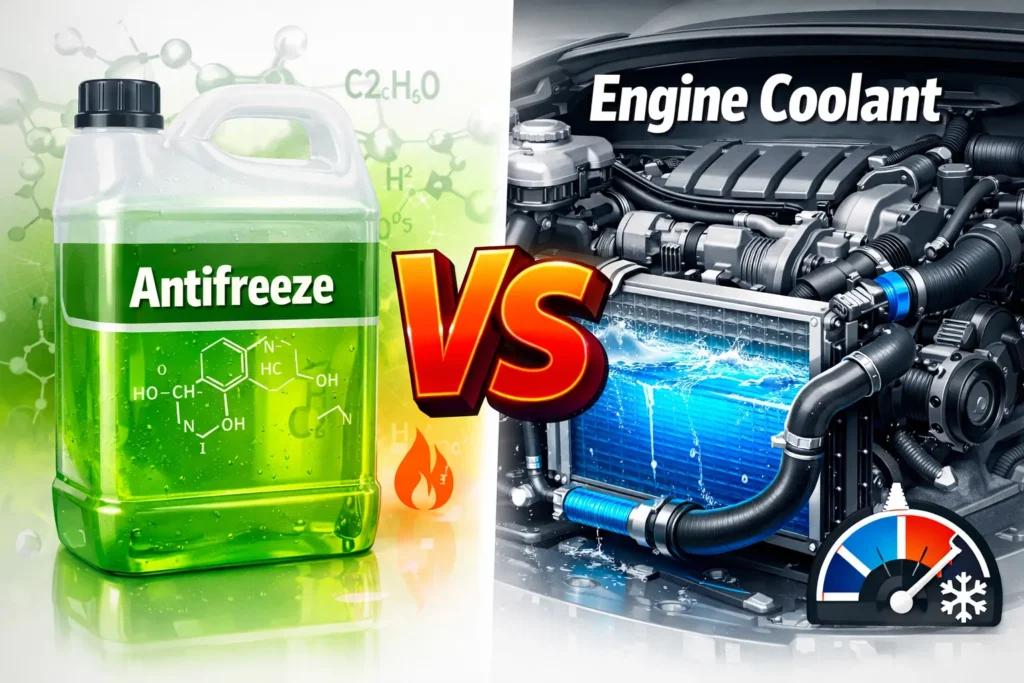
Your vehicle’s cooling system plays a critical role in keeping the engine operating at the proper temperature, and engine coolant is the key fluid that makes this possible. As your engine runs, it produces intense heat that must be controlled to prevent overheating and serious mechanical damage. Without a properly functioning cooling system and the right engine coolant mixture, vital components can wear out prematurely or fail entirely. Maintaining the correct temperature not only protects the engine but also improves performance and fuel efficiency.
Many drivers use the terms engine coolant and antifreeze interchangeably, assuming they mean the same thing. While they are closely related, they are not exactly identical. This confusion can sometimes lead to improper maintenance or using the wrong fluid in your vehicle.
In this article, you’ll learn the clear difference between antifreeze and engine coolant, how each works, and why understanding this distinction is essential for keeping your vehicle running smoothly in all seasons.
What Is Antifreeze?
Antifreeze is a concentrated liquid solution designed to regulate temperature in a vehicle’s engine. On its own, it is not typically ready for direct use in your cooling system.
The main ingredients in antifreeze are either ethylene glycol or propylene glycol. Ethylene glycol is more commonly used due to its strong heat transfer properties, while propylene glycol is considered less toxic and more environmentally friendly.
The primary purpose of antifreeze is to lower the freezing point of liquid and raise its boiling point. This prevents engine fluids from freezing in cold weather and from boiling over in extreme heat.
However, antifreeze alone is not usually used by itself because it does not transfer heat as efficiently without water. Using straight antifreeze can actually reduce cooling efficiency and potentially damage engine components.
What Is Engine Coolant?
Engine coolant is the fluid that circulates through your vehicle’s cooling system to regulate engine temperature. Unlike antifreeze concentrate, coolant is typically a mixture of antifreeze and water.
In most vehicles, coolant consists of a 50/50 mixture of antifreeze and distilled water. This balance provides optimal freeze protection, boiling protection, and heat transfer efficiency. Some climates may require slightly different ratios, but 50/50 is the industry standard.
Coolant plays a crucial role in absorbing heat from the engine and transferring it to the radiator, where it is released into the air. This continuous cycle prevents overheating and ensures stable engine operation.
In addition to temperature control, coolant contains additives that protect against rust, corrosion, and scale buildup inside the cooling system. These protective properties help extend the life of components such as the radiator, water pump, and heater core.
Engine Coolant vs Antifreeze: Key Differences
Although engine coolant and antifreeze are closely related, they are not exactly the same thing. Understanding their differences helps prevent costly maintenance mistakes and ensures your vehicle runs efficiently in all weather conditions. While many drivers use the terms interchangeably, each serves a slightly different purpose within the cooling system. Below, we break down the key differences in composition, function, usage, and seasonal performance to make the distinction clear.
Composition
The main difference lies in composition. Antifreeze is a concentrated chemical solution made primarily of glycol-based compounds.
Engine coolant, on the other hand, is a diluted mixture of antifreeze and water. The added water improves heat transfer and makes the solution safe and effective for use in your vehicle.
Function
Antifreeze’s primary function is to lower the freezing point and raise the boiling point of the liquid it’s mixed with.
Coolant performs the broader task of managing engine temperature year-round. It not only prevents freezing and boiling but also transfers heat efficiently and protects internal engine components from corrosion.
Usage
In most cases, antifreeze must be diluted before use. Pouring concentrated antifreeze directly into your cooling system can reduce heat dissipation and potentially cause overheating.
Many coolants sold today are pre-mixed and ready to pour. These pre-diluted formulas eliminate guesswork and ensure the correct ratio for most driving conditions.
Seasonal Performance
Both antifreeze and coolant are designed to protect your engine in extreme temperatures. In winter, they prevent freezing that could crack engine blocks or radiators.
In summer, they raise the boiling point of the fluid, preventing overheating and vapor formation. Properly mixed coolant ensures reliable performance in both hot and cold climates.
Can You Use Antifreeze Instead of Coolant?
Using straight antifreeze instead of properly mixed coolant is not recommended. While antifreeze does provide freeze and boil protection, it does not dissipate heat as effectively without water.
Straight antifreeze can actually lead to reduced cooling performance and may cause engine overheating. It can also strain components like the water pump.
Maintaining the correct water-to-antifreeze ratio is essential. Most manufacturers recommend a 50/50 mix, though extremely cold climates may require a slightly higher concentration of antifreeze.
Always follow your vehicle manufacturer’s guidelines to ensure proper cooling system performance and long-term reliability.
Types of Engine Coolant
Not all coolants are the same. Different vehicles require specific types of coolant based on engine materials and design.
Inorganic Additive Technology (IAT) is an older coolant formula commonly found in older vehicles. It typically needs to be replaced every two years or 30,000 miles.
Organic Acid Technology (OAT) is used in many modern vehicles. It provides longer-lasting corrosion protection and can last up to five years or more.
Hybrid Organic Acid Technology (HOAT) combines features of both IAT and OAT. It offers enhanced protection and is used in certain European and domestic vehicles.
Choosing the correct type of coolant is crucial. Using the wrong formula can cause corrosion, clogging, or damage to the cooling system.
How to Check and Maintain Your Coolant
Regular maintenance of your coolant system helps prevent costly repairs.
To check coolant levels, locate the coolant reservoir under the hood and ensure the fluid sits between the minimum and maximum marks. Always check levels when the engine is cool to avoid burns.
Coolant should typically be flushed and replaced according to your vehicle manufacturer’s recommended service interval. Over time, coolant additives break down and lose effectiveness.
Warning signs of cooling system problems include engine overheating, low coolant warnings, visible leaks, sweet-smelling odors, or discolored fluid. Addressing these issues early can prevent serious engine damage.
Frequently Asked Questions (FAQs)
Is coolant the same as antifreeze?
No. Antifreeze is the concentrated chemical solution, while coolant is typically a mixture of antifreeze and water ready for use.
What happens if you mix different types?
Mixing different coolant types can reduce effectiveness and may cause chemical reactions that form sludge or block passages in the cooling system.
How often should coolant be replaced?
It depends on the type of coolant and your vehicle manufacturer’s recommendations. Some require replacement every two years, while others last up to five years or more.
Does coolant expire?
Yes. Over time, coolant loses its protective additives and becomes less effective, even if the vehicle isn’t driven frequently.
Conclusion
Understanding the difference between engine coolant and antifreeze is essential for proper vehicle maintenance. Antifreeze is the concentrated base solution, while coolant is the diluted mixture that actually circulates through your engine.
Using the correct type and maintaining the proper ratio helps protect your engine from freezing, overheating, and corrosion. Regular inspection and timely replacement of coolant can significantly extend the life of your vehicle and prevent expensive repairs.
If you’re unsure which coolant is right for your vehicle, consult your owner’s manual or speak with a trusted automotive professional.