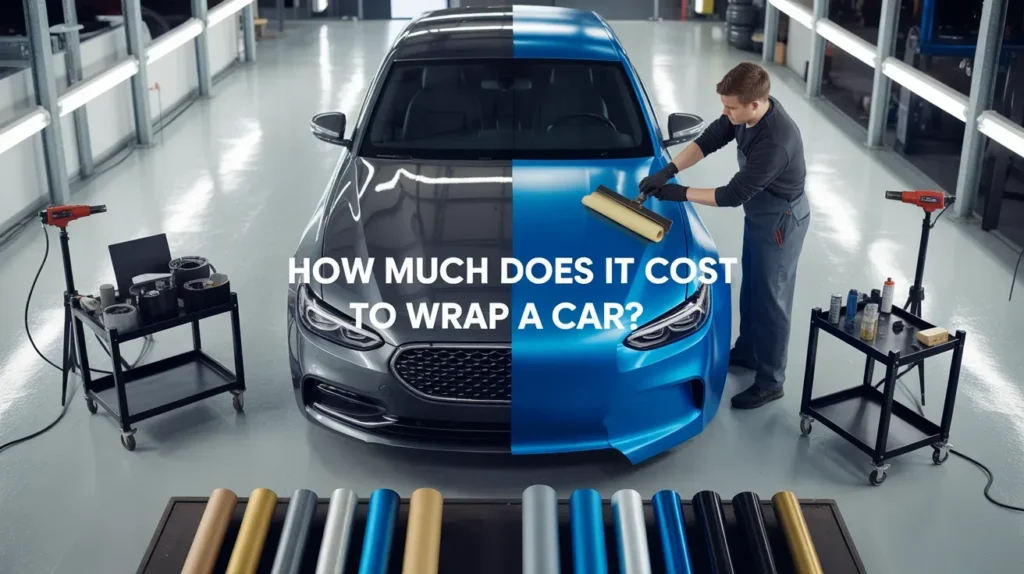
If you’re wondering how much does it cost to wrap a car, you’re not alone. A car wrap is a vinyl covering applied to your vehicle’s exterior that can completely change its look, protect the original paint, or even display custom graphics and advertising. Wraps come in various types, from full wraps that cover the entire vehicle to partial wraps that highlight specific areas like the hood, roof, or mirrors. With options ranging from glossy and matte finishes to metallic or carbon fiber textures, car wraps offer a flexible and creative way to transform your vehicle without the permanence of paint.
Many car owners choose to wrap their cars for several reasons. Beyond customization and style, wraps help protect the original paint, preserve resale value, and even serve as a mobile advertising platform for businesses. But before making a decision, most people ask themselves: how much does it cost to wrap a car? The answer depends on several factors, including vehicle size, vinyl quality, design complexity, and labor charges. This guide will break down everything you need to know so you can plan your budget and choose the right wrap for your car.
Understanding Car Wraps
Before diving into costs, it’s important to understand what a car wrap is and why it has become such a popular choice among vehicle owners. A car wrap isn’t just a temporary decoration—it’s a versatile solution that combines aesthetics, protection, and even advertising potential.
What is a Car Wrap?
A car wrap is essentially a high-quality vinyl film applied directly to your vehicle’s exterior. Unlike paint, which permanently changes the color of your car, vinyl wraps are removable, allowing for flexibility and creativity. This means you can completely transform your vehicle’s look without committing to a permanent color or finish.
Vinyl Wrap vs Paint
- Vinyl Wrap: Non-permanent, available in a variety of textures and finishes such as matte, gloss, metallic, or carbon fiber. Easier to apply and remove, protecting the original paint underneath.
- Paint: Permanent and generally more expensive, especially for custom colors. While durable, changing the color later requires repainting the entire vehicle.
Types of Car Wraps:
- Full Wrap: Covers the entire vehicle, offering the most dramatic transformation. Ideal for color changes or complete advertising graphics.
- Partial Wrap: Covers specific areas like the hood, roof, or mirrors, perfect for accent designs or small-scale branding.
- Color Change Wrap: Completely changes the vehicle’s color without repainting.
- Custom Graphics Wrap: Allows for logos, patterns, or intricate designs, often used for business promotions or personal style statements.
Benefits of Wrapping Your Car
Car wraps are more than just a visual upgrade—they provide several practical benefits:
- Protects Original Paint: The vinyl acts as a protective layer against scratches, minor dings, and UV damage. This helps preserve the vehicle’s original paint, which is especially valuable if you plan to sell the car later.
- Allows Unique Customization: From matte black finishes to vibrant metallics and custom graphics, wraps give you creative freedom that traditional paint often can’t match.
- Maintains Resale Value: Since the original paint remains intact under the wrap, it helps maintain the car’s resale value. Removing the wrap later can restore the vehicle to its original appearance.
- Cost-Effective Compared to Repainting: While a high-quality wrap might seem expensive initially, it’s generally less costly than a professional paint job, especially for specialty colors or designs.
Lifespan of a Car Wrap
The durability of a car wrap depends on the material, exposure to the elements, and how well it is maintained.
- Average Lifespan: Most vinyl wraps last between 3–7 years, depending on quality and environmental conditions. Premium wraps may last even longer with proper care.
- Maintenance Tips to Prolong Life:
- Wash the car regularly with gentle, non-abrasive cleaners.
- Avoid automatic car washes with harsh brushes that can scratch the wrap.
- Park in shaded or covered areas to reduce UV damage.
- Apply protective coatings or sealants recommended by the installer.
By understanding what a car wrap is, its benefits, and how long it lasts, you’ll be better equipped to make a smart decision when considering your next vehicle upgrade. This knowledge also helps explain why costs can vary so widely depending on the type of wrap and the complexity of installation.
Factors That Affect the Cost of Car Wrapping
When considering how much does it cost to wrap a car, it’s important to understand that the price isn’t fixed. Several factors influence the final cost, from the size of your vehicle to the type of material and design complexity. Let’s break down the main elements that affect pricing:
Vehicle Size
The size of your car is one of the most significant factors in determining the cost of a wrap.
- Compact Cars vs SUVs vs Trucks: Smaller cars typically cost less to wrap because they have less surface area, while larger vehicles like SUVs, vans, and trucks require more vinyl and labor.
- Surface Area Matters: More surface area means more material, more labor hours, and potentially more complexity in fitting the wrap around curves and edges. Even subtle differences in size can add hundreds of dollars to the total cost.
Type of Wrap Material
The type and quality of vinyl you choose plays a major role in the overall expense:
- Standard Vinyl vs Premium Vinyl: Standard vinyl is more affordable but may have a shorter lifespan and limited finish options. Premium vinyl, like 3M or Avery Dennison brands, tends to be more durable, resistant to fading, and offers superior stretch and finish.
- Texture and Finish: Wraps come in a variety of textures including matte, gloss, satin, metallic, and even specialty finishes like carbon fiber or chrome. More unique finishes generally cost more due to higher material prices and more careful installation requirements.
Complexity of Design
Not all wraps are created equal—design intricacy can significantly impact cost:
- Simple Solid Colors: A single-color wrap is generally the most affordable option. It’s straightforward to install and requires less preparation and alignment.
- Detailed Graphics and Custom Designs: Wraps that feature multiple colors, logos, patterns, or gradients take longer to design and install. Custom work often requires digital printing, precise cutting, and careful alignment, which increases both labor and material costs.
Labor Costs
Installation is a skilled process, and labor costs can vary widely:
- Professional Installation vs DIY Kits: Hiring a professional ensures a smooth, bubble-free finish and usually comes with a warranty. DIY kits are cheaper but carry a higher risk of mistakes that can damage the vinyl or the car’s paint.
- Geographic Variations: Labor rates differ depending on location. Urban areas or regions with higher living costs typically have higher installation fees, while rural areas may be more affordable but have fewer experienced installers.
Additional Services
Beyond the basic wrap, several additional services can add to the total cost:
- Paint Protection Film (PPF): Sometimes applied over the wrap or under it to protect high-impact areas like bumpers and hoods.
- Removal of Old Decals or Wraps: Prepping the vehicle may include stripping previous wraps or decals, which can add labor time.
- Surface Preparation: Cleaning, minor dent repair, or smoothing uneven panels ensures the wrap adheres properly and lasts longer.
- Edge Sealing and Warranties: Professional installers may charge extra for edge sealing to prevent peeling and offer extended warranties for long-term protection.
Understanding these factors helps explain why car wrap costs can vary dramatically—from a few hundred dollars for a small, partial wrap to several thousand for a full, high-end, custom design. By considering your vehicle size, material choice, design complexity, labor, and additional services, you can better plan your budget and get a wrap that meets both your aesthetic and practical needs.
Average Car Wrap Costs
Understanding the average cost of a car wrap helps you budget and decide which type of wrap is right for your vehicle. Costs vary widely depending on the size of the vehicle, the material, the design complexity, and whether you hire a professional or attempt a DIY installation.
Full Car Wrap
A full car wrap covers the entire vehicle, providing the most dramatic transformation and protection.
- Price Range: For standard vehicles, full wraps typically cost between $2,000 and $5,000.
- Examples by Vehicle Type:
- Sedans: Usually on the lower end of the price range due to smaller surface area.
- SUVs: Larger size and more complex curves increase both material and labor costs.
- Trucks/Vans: The largest vehicles require more vinyl and installation time, often approaching the higher end of the price range.
Full wraps are ideal for color changes, complete branding, or personal customization.
Partial Car Wrap
Partial wraps cover only certain sections of the vehicle, such as the hood, roof, mirrors, or accent areas.
- Price Range: Partial wraps are more budget-friendly, typically ranging from $300 to $1,500, depending on the area covered and the complexity of the design.
- Ideal Uses: Perfect for highlighting a design, adding a racing stripe, or featuring business logos without the cost of a full wrap.
Partial wraps are a great option if you want a fresh look without spending a full budget.
Specialty Wraps
Specialty wraps use premium materials or finishes that require extra precision during installation.
- Popular Finishes: Matte, chrome, metallic, color-shift, carbon fiber textures, or holographic effects.
- Premium Pricing: Specialty wraps often range from $4,000 to $8,000 or more, due to higher material costs, intricate installation, and longer labor time.
These wraps are ideal for luxury vehicles, show cars, or anyone looking for a high-impact, unique appearance.
DIY vs Professional Installation
- DIY Kits: Some vinyl wrap kits are available for DIY installation, often costing $150–$600 depending on size and material.
- Risks of DIY: Without professional experience, it’s easy to create bubbles, wrinkles, or uneven edges, which can damage the wrap or reduce its lifespan. Professional installation ensures a smooth, long-lasting finish and usually comes with a warranty.
Hidden Costs to Consider
When planning a car wrap, it’s important to account for additional expenses beyond the base price:
- Surface Preparation: Proper cleaning, minor dent repair, or smoothing panels ensures the vinyl adheres correctly and lasts longer. Some installers charge extra for this prep work.
- Removal of Old Wraps: If you’re upgrading from a previous wrap, removal costs may add several hundred dollars depending on size and complexity.
- Warranty or Maintenance Packages: Extended warranties or maintenance services can increase the upfront cost but provide peace of mind for long-term durability.
- Design Consultation Fees: Custom graphics or complex designs may require a professional consultation or digital mockup, which can add to the total cost.
Taking hidden costs into account helps you avoid surprises and ensures your budget reflects the full investment required for a quality car wrap.
Cost Comparison: Car Wrap vs Paint Job
When deciding between wrapping and repainting your vehicle, it’s important to compare not just the upfront price but also long-term value, durability, and customization options.
Price Differences (Short-Term vs Long-Term)
A professional car wrap typically costs between $2,000 and $5,000 for a full wrap, while a high-quality paint job can range from $3,000 to $10,000 or more, especially for custom colors or specialty finishes.
In the short term, wraps are often more affordable than premium paint jobs. However, paint can last significantly longer if properly maintained. A wrap may need replacement after 5–7 years, while a quality paint job can last 10 years or more.
That said, if you like changing your vehicle’s look every few years, wrapping may be the more cost-effective long-term option because it avoids repeated repainting expenses.
Durability and Maintenance Comparison
- Car Wrap: Protects the original paint from minor scratches, UV exposure, and road debris. Requires gentle washing and care to prevent peeling or fading.
- Paint Job: Highly durable when professionally applied, but more vulnerable to chips and scratches from daily driving. Repairs can be expensive and noticeable.
Wraps act as a protective layer, preserving the factory paint underneath, which can be a major advantage when it comes to resale value.
Visual Appeal and Customization Flexibility
This is where car wraps truly stand out.
With wraps, you can choose from:
- Matte, satin, gloss, chrome, metallic, or color-shifting finishes
- Textures like carbon fiber or brushed metal
- Full custom graphics, branding, or printed artwork
Paint offers beautiful finishes but is limited in specialty textures and can become extremely expensive for complex designs. Wraps provide greater creative freedom without permanent commitment.
Tips to Save Money on a Car Wrap
Wrapping your car doesn’t have to break the bank. Here are practical ways to reduce costs while still achieving a professional result:
Choose Standard Colors
Standard gloss or matte colors are usually more affordable than specialty finishes like chrome or color-shift vinyl. Sticking to common options can significantly reduce material costs.
Compare Multiple Installers
Get at least 2–3 quotes from reputable wrap shops. Prices can vary based on labor rates and experience. Comparing options ensures you’re getting fair value without sacrificing quality.
Avoid Last-Minute Design Changes
Frequent revisions to custom designs can increase consultation fees and delay installation. Finalize your design before production begins to avoid unnecessary costs.
Look for Seasonal Discounts and Promotions
Some wrap shops offer discounts during slower seasons or promotional periods. Following local installers on social media can help you catch limited-time deals.
How to Choose the Right Installer
The quality of installation can make or break your car wrap. Even premium vinyl won’t look good if applied poorly.
Check Portfolio and Previous Work
Review before-and-after photos of completed projects. Look for clean edges, smooth finishes, and attention to detail around curves and door handles.
Ask About Warranty and Maintenance
A reputable installer should offer a warranty covering peeling, bubbling, or early wear. Also ask about recommended care instructions to maximize lifespan.
Read Reviews and Get Multiple Quotes
Online reviews provide insight into customer satisfaction and professionalism. Don’t choose solely based on price—experience and reputation matter just as much.
Confirm the Type and Quality of Vinyl Used
High-quality brands last longer and look better. Ask what brand of vinyl they use and why. Premium materials may cost more upfront but reduce the risk of early failure.
Final Thoughts
By now, you should have a clear understanding of how much does it cost to wrap a car and why pricing can vary so widely. The total investment depends primarily on four key factors:
- Vehicle size
- Type and quality of vinyl material
- Labor and installer expertise
- Design complexity
A compact sedan with a standard gloss finish will cost significantly less than a large SUV wrapped in chrome or a fully customized graphic design. Material choice and installation quality play a major role in both the final price and the longevity of the wrap.
If you’re still wondering how much does it cost to wrap a car for your specific vehicle, the best approach is to request detailed quotes from reputable local installers. Comparing options, reviewing portfolios, and understanding what’s included in the price will help you make a confident and informed decision.
Ultimately, whether your goal is protection, personalization, or business branding, planning your budget around your desired results ensures you get the best value for your investment.