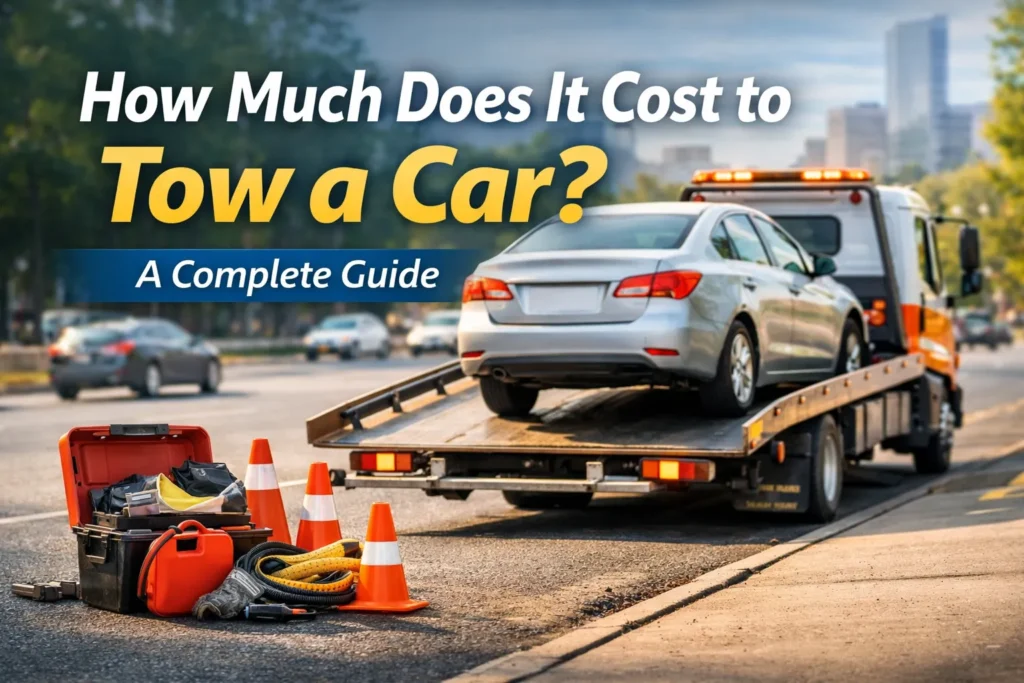
How much does it cost to tow a car? The answer isn’t always simple. Being without your vehicle due to an accident, a mechanical breakdown, or even a parking violation can be stressful and inconvenient—but the cost of towing can make the situation even more frustrating. Towing fees vary widely depending on several factors, including the type and size of your vehicle, the distance it needs to be moved, the time of day, and your location. Knowing what influences these costs can help you plan ahead, avoid unexpected bills, and choose the most cost-effective towing solution.
Towing rates are far from uniform. For example, transporting a small sedan a few miles in a quiet rural area will usually be much cheaper than moving a large SUV or luxury vehicle late at night in a busy city. This guide will break down the main factors that affect towing costs, offer tips to save money, and explain alternatives that may prevent a costly tow altogether, giving you a clear understanding of what to expect if your car ever needs to be towed.
Factors That Affect Towing Costs
Towing costs aren’t one-size-fits-all. Several variables combine to determine what you’ll pay for towing. Let’s explore them in detail:
Distance of the Tow
One of the most straightforward factors is the distance your vehicle needs to be transported. Tow companies generally structure pricing in two parts: a hook-up fee and a per-mile fee.
- Hook-up fee: Also called a “drop fee” or “connection fee,” this is the initial charge for securing your car to the tow truck. Typically, this ranges from $50 to $100 depending on the company.
- Per-mile fee: This is the cost for transporting the car per mile, usually $2 to $4 per mile. Longer distances may sometimes have discounted rates for bulk miles, but short trips can feel disproportionately expensive.
Example: If your car is towed 10 miles with a $75 hook-up fee and $3 per mile, the total is:
$75 + (10 × $3) = $105.
Keep in mind that some companies may also add extra charges for tolls or difficult access if the car is located in a tight or hard-to-reach area.
Type and Size of Vehicle
Not all cars are created equal when it comes to towing. The size, weight, and value of your vehicle can significantly affect the final cost:
- Standard sedans: These are the easiest and cheapest to tow, usually billed at the base rate.
- SUVs and pickup trucks: Larger vehicles are heavier and may require stronger equipment. Towing these can add $20–$50 to the bill.
- Exotic, luxury, or oversized vehicles: These often require specialized flatbed trucks or extra handling precautions, which can push the cost to $200 or more.
Additionally, vehicles with modifications, lowered suspensions, or unusual dimensions may need extra care, which can also increase towing fees.
Time of Day
Tow companies often charge higher rates outside of regular business hours. If you need assistance late at night, on weekends, or during holidays, you may encounter “after-hours” or “emergency” fees, which can sometimes double the base rate.
For instance, a $75 daytime hook-up fee could become $150 if the tow is needed at 2 a.m. The rationale is that towing companies need to incentivize technicians to work during unsociable hours and cover the higher operational costs.
Location
Where you are also impacts towing costs. Urban areas with higher demand, more traffic, and expensive labor generally have higher rates than rural or suburban areas:
- Urban areas: Short local tows can range between $150–$250.
- Rural areas: Similar short-distance tows may cost closer to $75–$150.
Traffic conditions, city ordinances, and municipal regulations can also play a role. Some cities charge additional fees if the tow is for a parking violation or requires municipal paperwork.
Type of Tow
The method of towing influences both safety and cost. Here’s a breakdown of the most common tow types:
- Flatbed towing – The safest and most reliable option. The car is loaded entirely onto a flatbed truck, minimizing the risk of damage. Ideal for all-wheel-drive vehicles, cars with damage, or luxury/exotic vehicles. Local flatbed tows typically cost $75–$150.
- Wheel-lift towing – This method lifts either the front or rear wheels of the car while the other wheels roll on the road. It’s commonly used for short distances and is generally cheaper, around $50–$100. However, it’s less secure for certain vehicles.
- Heavy-duty towing – Used for trucks, vans, buses, or extremely heavy vehicles. This method requires specialized equipment and can cost $200–$500 or more, depending on weight and distance.
Choosing the right towing type is essential to prevent further damage to your vehicle and ensure safe transport.
Average Towing Costs
Here’s a breakdown of typical towing costs in the U.S.:
| Tow Type | Short Distance (1–5 miles) | Medium Distance (5–15 miles) | Long Distance (15+ miles) |
| Sedan / small car | $50–$100 | $100–$200 | $200–$400 |
| SUV / Pickup | $70–$120 | $150–$250 | $250–$500 |
| Heavy-duty / oversized | $150–$300 | $300–$600 | $600+ |
Tip: Always ask if your tow includes a hookup fee, per-mile rate, and after-hours surcharge.
Additional Costs to Consider
Towing isn’t just about getting your car from point A to B. Extra costs may appear depending on circumstances:
- Storage Fees – If your car is taken to a tow lot, expect $15–$50 per day.
- Accident Towing – If your car is damaged in a crash, tow companies may charge extra for safe handling.
- Winching / Recovery Fees – Getting a car out of a ditch, mud, or snow often costs $50–$150+.
- Administrative / Ticket Fees – Some municipal tows include extra fees if associated with parking violations.
Ways to Save on Towing Costs
Towing can get expensive quickly, but there are several strategies you can use to minimize costs without compromising safety. Here’s how to save:
1. Check Your Auto Insurance Coverage
Many auto insurance policies include roadside assistance, which can cover towing for a certain distance or under specific circumstances. Before you call a tow truck, review your policy to see if you’re already entitled to free or discounted towing services. This can significantly reduce out-of-pocket expenses.
2. Consider Roadside Assistance Plans
If your insurance doesn’t include towing, dedicated roadside assistance services—like AAA, Allstate Motor Club, or similar programs—offer annual plans that cover short-distance tows. These plans often include additional perks such as battery jump starts, tire changes, or fuel delivery, providing both convenience and savings over paying per tow.
3. Compare Local Tow Companies
Towing rates can vary widely, even within the same city. A quick phone call or online search to compare prices from different local tow providers can help you find the most cost-effective option. Don’t be afraid to ask about hookup fees, per-mile rates, and any extra charges—clarity upfront avoids surprises later.
4. Avoid After-Hours Towing
Tow services typically charge higher rates during nights, weekends, and holidays. Whenever possible, schedule towing during regular business hours to avoid these “emergency” or “after-hours” surcharges. Even a short delay could save you a substantial amount.
5. Handle Minor Issues Yourself
Not every breakdown requires a full tow. For minor problems like a dead battery, flat tire, or being stuck in a small ditch, consider alternatives that can save both time and money. For instance, a jump start can get you back on the road immediately, often at a fraction of the cost of a tow. Similarly, having basic tools, a spare tire, or roadside emergency kit can prevent small issues from turning into expensive towing situations.
Towing vs. Using a Mobile Mechanic
Not every car problem requires a full tow. In many cases, calling a mobile mechanic can be a faster, cheaper, and more convenient alternative. These professionals travel to your location and perform basic repairs on the spot, helping you avoid unnecessary towing costs.
Common services provided by mobile mechanics include:
- Dead battery replacement or jump starts – Perfect for situations where your car won’t start but has no other damage.
- Flat tire or tire change – A mobile mechanic can replace a blown tire safely without needing a tow.
- Fuel delivery – Running out of gas is a surprisingly common reason for roadside assistance calls.
- Minor mechanical repairs – Sometimes a loose belt, simple fluid refill, or other small fixes can get your car running immediately.
In many cases, hiring a mobile mechanic may cost similar or even less than a tow plus repair, especially for minor issues that don’t require transporting your car to a shop. For small fixes, this approach can save you both money and valuable time.
Key Questions to Ask Before You Tow
Before committing to a towing service, it’s important to ask the right questions to avoid unexpected charges. Understanding the cost structure can save you hundreds of dollars:
- What is the hook-up fee? – This is the initial charge for securing your car to the tow truck.
- How much is the per-mile charge? – Some companies charge more for longer distances or for rural tows.
- Are there after-hours or holiday surcharges? – Towing late at night, on weekends, or during holidays can double your costs.
- Is the tow flatbed or wheel-lift? – Flatbeds are safer but may cost more; wheel-lifts are cheaper but not ideal for all vehicles.
- Where will my car be taken, and are there storage fees? – If your car is stored at a tow lot, daily storage fees may apply.
Getting clear answers to these questions before the tow begins ensures you know exactly what you’re paying for and prevents surprise bills later.
Final Thoughts
Wondering how much does it cost to tow a car? The answer depends on several factors, which can make towing fees vary widely—from as little as $50 for a short local tow to $500 or more for longer distances or larger vehicles. Here’s what affects the price:
- Distance of the Tow: The farther your car needs to be transported, the higher the cost. Local tows are usually cheaper, while long-distance or cross-city towing can increase the bill significantly.
- Type and Size of Vehicle: Larger vehicles such as SUVs, trucks, and luxury cars cost more to tow due to their weight and the special equipment required.
- Time of Day: Nights, weekends, and holidays often trigger higher fees, sometimes called “after-hours” or “emergency” surcharges.
- Location: Urban areas with heavy traffic or high demand tend to charge more than rural or suburban areas.
- Type of Tow Required: Different towing methods have different costs. Flatbed towing is safer but often more expensive, wheel-lift towing is cheaper for short distances, and heavy-duty towing for large vehicles is the priciest option.
By understanding how much it costs to tow a car, comparing local towing companies, checking if your insurance or roadside assistance covers towing, and exploring alternatives like mobile mechanics, you can minimize expenses while getting your car safely where it needs to go.
Pro Tip: Prevention is always more affordable than a tow. Regular vehicle maintenance, keeping a roadside emergency kit, and having coverage for minor breakdowns can reduce the likelihood of needing a costly tow. Knowing how much it costs to tow a car ahead of time helps you plan and avoid surprise expenses.