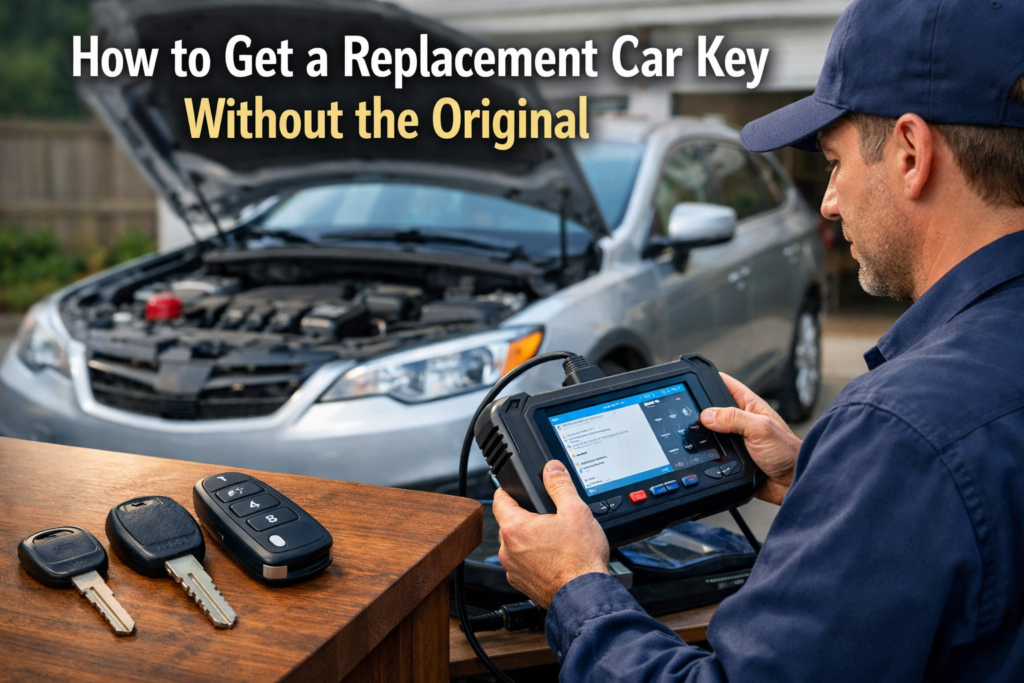
Losing your car key can be a stressful experience, especially if you don’t have a spare to fall back on. Without it, you could be locked out of your vehicle, unable to start the engine, or even unable to access certain features in modern cars. Knowing how to get a replacement car key without the original is essential for avoiding long delays, costly tow services, or the inconvenience of being stranded. The good news is that there are multiple ways to replace a lost key, depending on your car’s make, model, and the type of key it uses.
This guide will walk you through all the practical steps involved in obtaining a new key—from checking for spares and contacting professionals to programming transponder or smart keys—so you can regain access to your vehicle safely, quickly, and efficiently. Following these steps will help minimize stress and ensure your car remains secure while maintaining its full functionality.
Understanding Your Car Key Type
Before you start the replacement process, it’s important to understand what kind of key your car uses. Your key type determines both the method of replacement and the potential cost. When learning how to get a replacement car key without the original, identifying the key type is the first step:
- Standard Mechanical Keys – These are traditional metal keys with no electronic components. They are the simplest and least expensive to replace, often requiring just a key cutter or locksmith.
- Transponder Keys – These keys include a small embedded chip that communicates with your car’s immobilizer. Without proper programming, the engine won’t start, making replacement slightly more complex.
- Smart Keys / Key Fobs – Modern vehicles often use electronic key fobs with keyless entry or push-button start. Replacing these keys generally requires both a physical key cut and programming with specialized equipment, often performed by a dealership or qualified locksmith.
Knowing your key type will help you make the right decision about whether to go to a professional locksmith, contact your dealership, or use an authorized service to safely replace your key. Correct identification ensures the process is smooth, cost-effective, and avoids wasted time or effort.
Step 1: Check for Spare Keys
Before arranging a replacement, always check if you have a spare key available. This could be a key kept at home, in a safe, or with a trusted family member or friend. A spare key can save you significant time and money, as it may eliminate the need for a dealership visit or key programming services.
Even if you think you’ve exhausted all options, it’s worth double-checking glove compartments, drawers, or key hooks at home. Once you’ve confirmed there’s no spare, you can move on to professional replacement methods. Planning ahead for spares is also a good preventive measure to avoid similar situations in the future.
Step 2: Contact a Dealership or Professional Locksmith
Dealership Replacement
Most car dealerships can cut and program replacement keys, including transponder keys and smart key fobs. This is often the most straightforward option for modern vehicles. To obtain a new key from a dealership, you’ll typically need:
- Proof of ownership, such as the vehicle registration (V5C)
- A government-issued ID, like a driver’s license or passport
Dealerships use manufacturer-specific programming tools, which ensures your new key works perfectly with your car’s immobilizer system and any remote functions. However, dealership replacements are usually the most expensive option, especially for smart keys.
Professional Locksmith Replacement
Many licensed automotive locksmiths can provide replacement keys at a lower cost. Experienced locksmiths can:
- Cut standard mechanical keys
- Program transponder keys to work with your vehicle
- Program smart key fobs with remote entry and push-button start functions
Some modern vehicles require advanced diagnostic tools, so it’s important to confirm that the locksmith has experience with your specific car make and model.
Pro Tip: If your car battery is weak or dead while arranging key programming, it can affect the process. In such cases, it’s helpful to know how to jump start a car or how to test a car battery with a multimeter, as some programming procedures require the vehicle to have power.
Step 3: Provide Required Documentation
Whether you go through a dealership or locksmith, proof of ownership is mandatory. This helps prevent unauthorized duplication and ensures the security of your vehicle. Typical documents include:
- Vehicle registration certificate (V5C)
- Government-issued ID (passport or driver’s license)
- Proof of insurance
Keeping these documents updated and readily accessible makes the key replacement process smoother and faster. It also reduces delays if multiple keys need to be programmed or if additional verification is required.
Step 4: Key Programming
For transponder and smart keys, cutting the key alone is not enough. The new key must be programmed to communicate with your car’s immobilizer system. Key programming provides several benefits:
- Security: Lost or stolen keys cannot start the car
- Functionality: New keys integrate fully with features such as remote start, keyless entry, and alarm systems
Most dealerships and qualified locksmiths handle programming, which can take anywhere from 30 to 60 minutes depending on the vehicle model. Advanced vehicles with multiple electronic functions may take slightly longer.
Step 5: Prevent Future Problems
After successfully replacing your car key, taking a few preventive measures can save time and stress in the future:
- Make a spare key: Keep it in a secure location or with a trusted family member
- Label your keys: Clearly identify each key to avoid confusion
- Maintain key fob batteries: Replace batteries before they run out, especially for smart keys
- Regular vehicle maintenance: While unrelated to keys directly, keeping your car in top condition ensures smooth operation. Make it a habit to check oil and change oil regularly
By taking these steps, you minimize the chances of getting locked out or encountering unexpected key-related problems.
Cost Considerations
Replacement key costs vary based on several factors:
- Key type: Mechanical keys are inexpensive, transponder keys cost more, and smart keys can run several hundred pounds
- Vehicle make and model: Luxury or newer cars often require specialized programming, increasing cost
- Programming requirements: Keys that require immobilizer programming are typically more expensive than simple mechanical copies
Using a professional locksmith instead of a dealership can reduce costs without compromising reliability. For mechanical keys, DIY cutting is sometimes possible, but transponder and smart keys almost always require expert programming.
Conclusion
Losing your car key doesn’t have to derail your plans or cause unnecessary stress. By understanding your key type, checking for spare keys, and contacting a professional locksmith or dealership, you can efficiently get back on the road. Knowing how to get a replacement car key without the original ensures that even in unexpected situations, you have a clear plan of action.
For modern vehicles, key programming is essential to maintain full functionality, security, and integration with features like remote start, keyless entry, and alarm systems. Taking this step prevents lost or stolen keys from being a security risk and ensures your vehicle operates as intended.
Being proactive by creating spare keys, labeling them clearly, and maintaining your car’s systems—such as checking your battery or regularly checking and changing oil—helps prevent future emergencies. With these measures in place, you can drive confidently, knowing you’re prepared for unforeseen situations and keeping your vehicle safe, secure, and reliable.