Finding yourself in a situation where your car won’t start can be stressful and frustrating, especially if you’re running late for work, a meeting, or far from home with no help nearby. One of the most common reasons for this problem is a dead battery, which can happen unexpectedly due to cold weather, leaving your lights on, or simply because your battery is old. Fortunately, a dead battery doesn’t always mean disaster. Knowing how to jump start a car is a practical skill that can save you time, money, and a lot of stress.
Jump starting a car is a simple and effective solution when done correctly. With the right tools, proper safety precautions, and step-by-step guidance, even beginners can revive a dead battery quickly and safely. In this comprehensive guide, we’ll walk you through how to jump start a car from start to finish, including tips, common mistakes to avoid, and modern alternatives like portable jump starters. By the end of this article, you’ll feel confident handling a dead battery situation and getting back on the road without worry.
Understanding the Basics: What Is a Jump Start?
A jump start is the process of giving a dead car battery enough power to start the engine, using either another vehicle’s battery or a portable jump starter. Batteries can lose their charge for several reasons: leaving lights or accessories on, extreme weather, or simply because they’ve aged.
Jump starting works by transferring electrical energy from a charged battery to a dead one, temporarily providing the power needed to crank the engine and get the car running again.
Key Components:
- Dead battery: The battery that has lost charge and can’t start the engine.
- Good battery: A fully charged battery from another vehicle or a portable jump starter.
- Jumper cables: Usually color-coded red for positive (+) and black for negative (−).
- Safety precautions: Essential to prevent injury, sparks, or damage to your vehicle.
Understanding these basics sets the foundation for a safe and successful jump start.
Step 1: Gather the Necessary Tools
Before you begin, make sure you have everything you need:
- Jumper cables: Choose thick, insulated cables for better conductivity.
- A working vehicle: This car will provide the power to jump start the dead battery.
- Safety gear: Gloves and eye protection help prevent accidental injury.
- Optional – Portable jump starter: A battery pack that can start your car without needing another vehicle.
Having the right tools on hand ensures the process is smooth, fast, and safe.
Step 2: Prioritize Safety
Jump starting a car involves electricity and moving parts, so safety is crucial. Here are some important precautions:
- Ensure both vehicles are turned off and in park (or neutral for manual transmissions).
- Keep your hands, clothing, and jumper cables away from moving parts like belts or fans.
- Avoid sparks—never smoke or have open flames near the battery.
- Inspect the batteries for cracks, leaks, or corrosion. If a battery is damaged, do not attempt a jump start.
Taking a few extra minutes to ensure safety can prevent accidents and costly damage.
Step 3: Position the Vehicles
If you’re using another car to jump start:
- Park the working vehicle close to the dead car, but ensure the cars do not touch.
- Engage the parking brakes and make sure both vehicles are in park or neutral.
- Open the hoods and locate the battery terminals—positive (+) and negative (−).
Correct vehicle positioning ensures the jumper cables can reach safely without stretching or tangling.
Step 4: Connect the Jumper Cables Properly
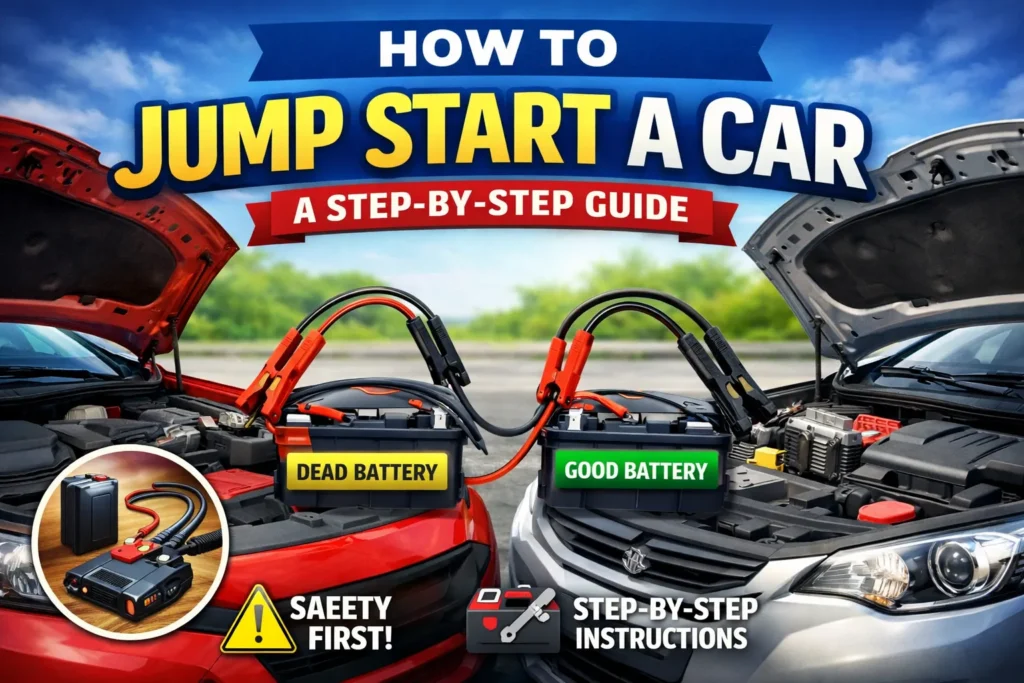
Connecting the cables correctly is critical. Follow this step-by-step:
- Red clamp to dead battery (+): Connect one end of the red cable to the positive terminal of the dead battery.
- Red clamp to good battery (+): Connect the other red clamp to the positive terminal of the working battery.
- Black clamp to good battery (−): Attach one black clamp to the negative terminal of the good battery.
- Black clamp to grounded metal surface: Instead of connecting directly to the dead battery’s negative terminal, attach the black clamp to an unpainted metal part of the dead car’s engine block. This reduces the risk of sparks.
⚠️ Never let the clamps touch each other while connected, as this can cause dangerous sparks.
Step 5: Start the Working Car
With the cables properly connected:
- Start the engine of the working car and let it run for 2–5 minutes.
- This charges the dead battery with enough energy to start the car.
- Check the dead car’s dashboard lights—if they brighten, it’s ready to start.
This step ensures that the dead battery has received a safe and steady charge.
Step 6: Start the Dead Car
Now comes the moment you’ve been waiting for: starting the car with the dead battery.
- Turn the key or press the start button on the vehicle with the dead battery. In most cases, if the cables are connected properly, the engine should turn over and start smoothly.
- If the car doesn’t start immediately, don’t panic. Wait for 2–5 minutes with the working car’s engine running. This gives the dead battery time to absorb more charge from the good battery. Then try starting the car again.
- Once the car starts, it’s important to keep both vehicles running for several minutes. This helps stabilize the battery voltage and ensures the car won’t stall right away.
⚠️ Patience is key. Forcing the engine to crank repeatedly without allowing the battery to recharge can strain both vehicles’ electrical systems, damage the starter motor, and potentially create sparks. Take a calm, measured approach, and let the battery gain enough energy before attempting another start.
By following these steps carefully, you can bring a dead battery back to life safely and avoid unnecessary stress or damage.
Step 7: Disconnect the Jumper Cables
After the car starts, remove the cables in reverse order:
- Black clamp from the grounded metal surface on the dead car.
- Black clamp from the good battery (negative).
- Red clamp from the good battery (positive).
- Red clamp from the dead battery (positive).
⚠️ Make sure clamps don’t touch each other or the car while removing them.
Proper cable removal prevents accidental sparks or short circuits.
Step 8: Let the Car Run
After a successful jump start:
- Keep the engine running for at least 15–30 minutes to allow the alternator to recharge the battery.
- Driving around instead of idling is more effective, as the alternator produces more power when the engine is moving.
This ensures your battery regains enough charge to start the car the next time you need it.
Tips to Avoid a Dead Battery in the Future
Preventing a dead battery is always better than dealing with one unexpectedly. By adopting a few simple habits and performing regular maintenance, you can significantly reduce the chances of being stranded due to a dead battery. Here are some practical tips to keep your car battery healthy and reliable:
1. Regular Maintenance
Car batteries require occasional care to perform at their best. Check the battery terminals for corrosion, dirt, or loose connections, as these can prevent the battery from charging properly. Clean any buildup with a battery brush or a solution of baking soda and water, and ensure the terminal clamps are tight. This simple maintenance step can prolong your battery’s life and prevent unexpected failures.
2. Turn Off Electronics When the Engine Is Off
Many drivers forget that electronics like headlights, radios, phone chargers, and interior lights draw power from the battery even when the car is off. Leaving these on for extended periods can drain the battery completely. Make it a habit to turn off all electronics before exiting the vehicle to preserve battery power.
3. Avoid Frequent Short Trips
Short drives, such as quick trips to the store, often don’t give your car’s alternator enough time to fully recharge the battery. Over time, this can leave the battery partially drained and more likely to fail. Whenever possible, combine short trips or take a longer drive to keep the battery fully charged.
4. Plan for Battery Replacement
Most car batteries last between 3 to 5 years, depending on climate, driving habits, and maintenance. Don’t wait until the battery fails completely—plan replacements proactively. If your battery is approaching the end of its lifespan or showing signs of weakness (slow starts, dim lights, corrosion), replacing it before it dies can save you time and frustration.
By following these habits consistently, you’ll minimize the risk of a dead battery and avoid inconvenient delays, ensuring that your car starts reliably every time.
When a Jump Start Isn’t Enough
Sometimes, even after successfully jump starting your car, the battery may continue to fail or the car may die again shortly after. This is a clear indication that the issue may be more serious than just a dead battery. Understanding the potential causes can help you address the problem before it leads to more serious damage.
Faulty Alternator
The alternator is responsible for charging the battery while the engine is running. If it’s malfunctioning, the battery won’t receive enough power to stay charged, leading to repeated failures. Signs of a faulty alternator include dimming lights, flickering dashboard indicators, or a battery warning light.
Loose or Corroded Battery Connections
Even a healthy battery can fail if the connections are loose, dirty, or corroded. Corrosion builds up over time on the terminals, preventing proper electrical flow and making it difficult for the car to start. Regularly inspecting and cleaning the terminals can prevent this issue.
Other Electrical System Problems
Sometimes, persistent battery problems stem from wiring issues, short circuits, or other malfunctioning electrical components. These can prevent the battery from holding a charge or supplying sufficient power to the car’s systems.
⚠️ If your car continues to die after jump starting, it’s best to consult a professional mechanic. Attempting repeated jump starts without addressing the underlying issue can cause damage to the starter motor, alternator, or other electrical components.
Portable Jump Starters: A Modern Alternative
If another vehicle isn’t available or you want a more convenient solution, a portable jump starter is an excellent alternative. These compact, battery-powered devices allow you to start your car quickly without relying on another vehicle.
- Easy to use: Most models come with clear instructions and built-in safety features.
- Reliable: Portable jump starters are designed to deliver a strong, consistent charge.
- Versatile: Many models can also charge smartphones, tablets, and other electronics in emergencies.
Simply connect the jump starter to your battery following the manufacturer’s instructions, and you’ll be back on the road in minutes. This is especially useful for solo drivers or situations where help isn’t immediately available.
Final Thoughts on how to jump start a car
Jump starting a car doesn’t have to be intimidating or stressful. By knowing how to jumpstart a car safely, gathering the right tools, and carefully following each step, you can quickly revive a dead battery and get back on the road with confidence.
In addition to knowing how to jumpstart a car, practicing regular battery maintenance—checking terminals for corrosion, keeping connections tight, and replacing old batteries—can prevent many common issues before they leave you stranded. Being aware of potential electrical problems, such as a faulty alternator or loose wiring, helps ensure you can address bigger issues promptly and avoid repeated battery failures.
Whether you rely on traditional jumper cables or modern portable jump starters, having the knowledge, tools, and confidence to act means you can handle a dead battery safely and efficiently, giving you peace of mind on the road.